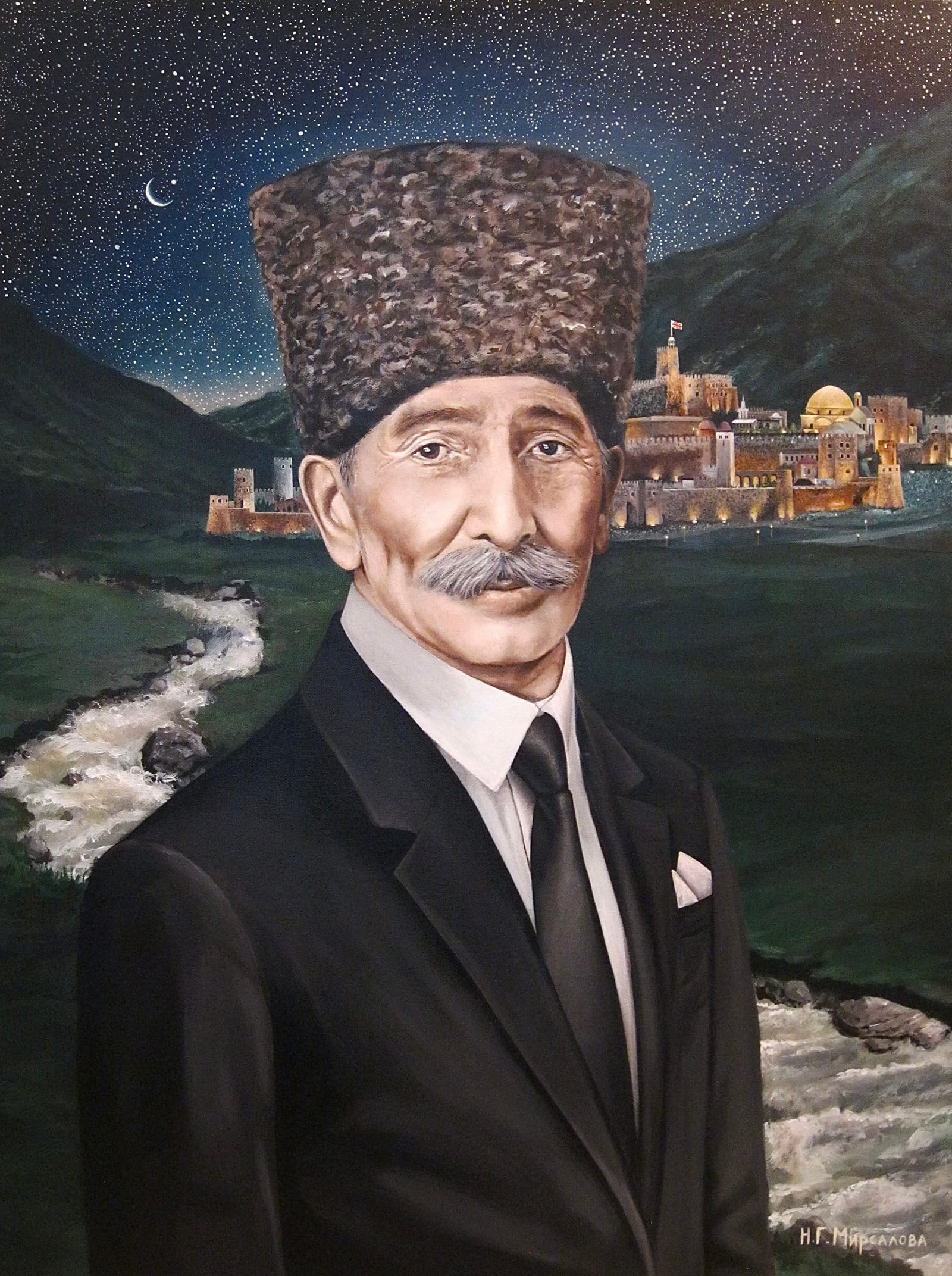
Anvar Odabashev was a history teacher—intelligent, proud, and a role model to many. Whenever I hear his story, I am deeply moved. He went to the front in 1941. He rose to the rank of senior officer and was awarded the Order of the Patriotic War, yet while he fought for his homeland, the unthinkable befell his people. In 1944, while he was away, his loved ones—his people—were deported in cramped, freezing freight cars. In the 1960s, he became a leader of the movement for the return of the Ahıska Turks. He rallied people, ignited their spirits, and inspired them. He faced betrayal, yet harbored not a drop of malice; he persevered to the very end. By the 1990s, his strength began to fail. Old age and illness took their toll, and my family cared for him tenderly. He passed away in 1993, never living to see his people finally return home. I was born in the 2000s, yet fate decreed that his story would become my inspiration. This painting is a powerful voice for those who never gave up.
Anvar Odabashev
Anvar Odabashev was a history teacher—intelligent, proud, and a role model to many. Whenever I hear his story, I am deeply moved. He went to the front in 1941. He rose to the rank of senior officer and was awarded the Order of the Patriotic War, yet while he fought for his homeland, the unthinkable befell his people. In 1944, while he was away, his loved ones—his people—were deported in cramped, freezing freight cars. In the 1960s, he became a leader of the movement for the return of the Ahıska Turks. He rallied people, ignited their spirits, and inspired them. He faced betrayal, yet harbored not a drop of malice; he persevered to the very end. By the 1990s, his strength began to fail. Old age and illness took their toll, and my family cared for him tenderly. He passed away in 1993, never living to see his people finally return home. I was born in the 2000s, yet fate decreed that his story would become my inspiration. This painting is a powerful voice for those who never gave up.